

Best Ski Pants for Freedom of Movement
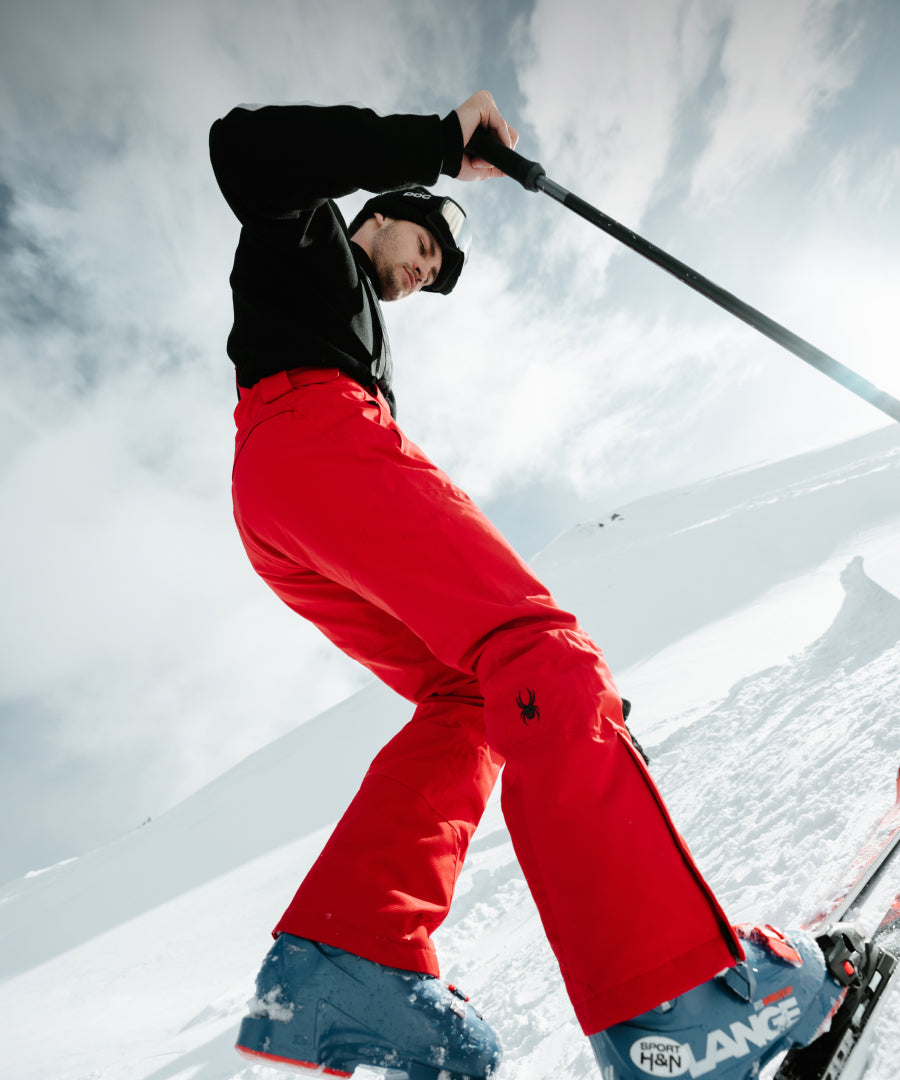
UNDERSTANDING PANT ARTICULATION
SKI PANTS THAT FIT WELL WHILE STANDING STILL CAN FEEL COMPLETELY DIFFERENT ONCE YOU'RE CARVING TURNS, DROPPING INTO A MOGUL FIELD, OR RIDING A CHAIRLIFT WITH YOUR KNEES BENT. THE DIFFERENCE USUALLY COMES DOWN TO ONE DESIGN DETAIL: ARTICULATION.
WHAT “ARTICULATION” ACTUALLY MEANS
Articulated ski pants are cut and sewn with pre-shaped bends built into the fabric, typically at the knee, rather than being cut as flat, straight panels. This pre-curved construction matches the natural bent-knee position you’re in for most of your time on skis, so the fabric doesn’t have to stretch or bunch to keep up with your movement.
Without articulation, straight-cut pants have extra fabric that either binds when your knee bends or bunches up awkwardly when you stand straight, since the pattern was designed for one position, not the other.

HOW TO SPOT GOOD ARTICULATION
- Pre-bent knee panels — you can often see the curved seam shape even when the pants are laid flat.
- Gusseted or stretch-panel crotch — added fabric or stretch material at the inseam allows a wider range of motion without restricting movement or tearing at the seam.
-
Articulated seat — a similar curved cut through the seat and upper thigh, which matters most when skiing in an athletic, slightly crouched stance.
- Four-way stretch fabric — even with articulation, added stretch (rather than a fully rigid shell) allows the pant to move with you rather than just accommodate one fixed position.

WHY THIS MATTERS MORE THAN PEOPLE EXPECT
Ski-specific movements, deep knee bends, lateral hip rotation during turns, hiking through deep snow, buckling boots all put more demand on pants than everyday activity. Poorly articulated pants can:
- Restrict how deep you can flex your knees, subtly limiting technique
- Cause fabric to ride up at the ankle when you bend, exposing your boot cuff to snow
- Create pressure points or bunching behind the knee that becomes uncomfortable over a full day

TESTING FIT
Don’t just try pants on standing straight. Before deciding on fit:
- Squat down into a skiing stance and hold it for a few seconds
- Lunge forward as if hiking or stepping into a binding
- Sit down as you would on a chairlift
- Check the ankle hem in each position, it shouldn’t ride up above your boot cuff
If the pants feel tight, restrictive, or bunch uncomfortably in any of these positions, keep looking even if they fit perfectly standing at rest.
ARTICULATION MATTERS MOST FOR:
- Aggressive or advanced skiers — deep, dynamic knee bends during hard turns demand the most range of motion
- Backcountry and touring skiers — long uphill hiking strides need a full range of hip and knee movement
- Instructors and patrollers — repeated demonstrations, kneeling, and varied stances all day
Casual, upright-stance skiers will notice articulation less, but a well-cut pant still improves comfort over a full ski day regardless of ability level.

THE BOTTOM LINE
Articulation is one of the least visible but most impactful features in a ski pant. It’s the difference between pants that fit in a mirror and pants that actually move with you on snow. When comparing options, look past color and fabric weight for a moment and check for pre-shaped knees, a gusseted crotch, and genuine stretch your legs will notice the difference by the end of run one.
Read more
STAY RACE-READY EACH AND EVERY SEASON YOUR RACE SUIT IS ONE OF YOUR BIGGEST GEAR INVESTMENTS, AND HOW YOU TREAT IT BETWEEN RUNS DETERMINES HOW LONG IT HOLDS ITS EDGE. A LITTLE CARE GOES A LONG WAY ...
HOW TO LAYER FOR SKIING NOTHING ENDS A SKI DAY FASTER THAN BEING TOO COLD, OR TOO SWEATY. THE FIX IS A PROPER SKI LAYERING SYSTEM: THREE LAYERS, EACH WITH A JOB, WORKING TOGETHER TO KEEP YOU WARM, ...